Louis Vuitton · 24 JANUARY 2026
How to Authenticate a Louis Vuitton Bag: A Practical Inspection Guide
Learn the key checks for a Louis Vuitton bag, from provenance and canvas alignment to stitching, hardware and interior details—without relying on any one sign alone.
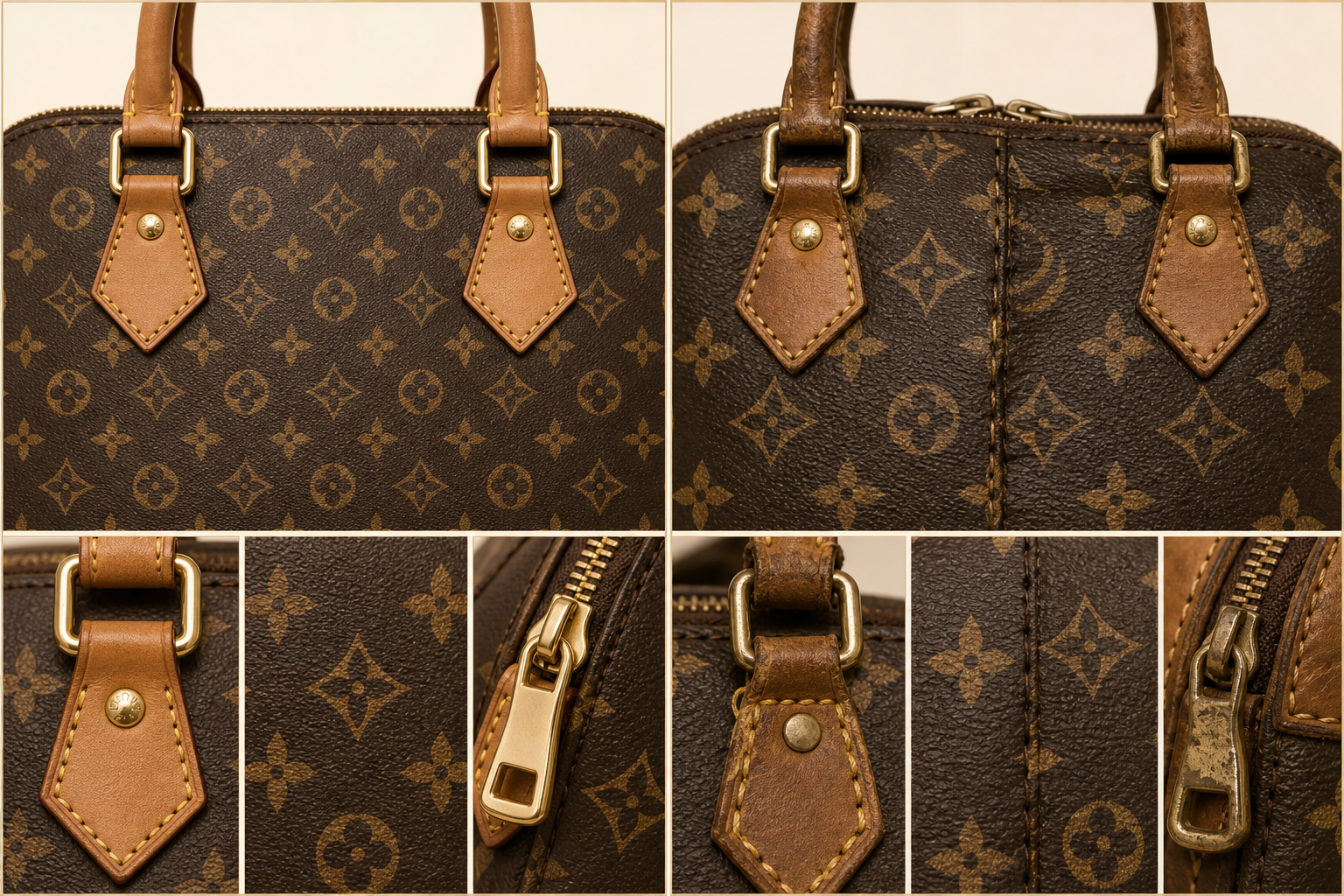
Buying pre-owned Louis Vuitton can be exciting, but a convincing-looking bag is not automatically an authentic one. The most reliable approach is to examine several details together, compare them with the correct model and production period, and seek a professional opinion when the purchase is high value.
This guide explains what to look for. It is educational only: no single detail—including a date code, stamp, or pattern—can prove authenticity by itself.
1. Start with provenance
Ask where the bag came from and request clear photographs of the item from every angle. A receipt, invoice, repair record, dust bag or box may support the story of ownership, but none of these accessories proves that the bag is genuine; they can be lost, replaced, or copied.
Check whether the seller’s description is consistent with the bag’s model, material, age and condition. Extremely low pricing, stock photos, refusal to share close-ups, or inconsistent answers are all reasons to pause.
2. Look at the canvas and pattern alignment
On many coated-canvas styles, the motif should look balanced across panels and seams. The exact placement varies by model, size and construction, so a partial motif at an edge is not automatically a problem. What matters is whether the pattern placement makes sense for that particular design.
Inspect the canvas texture too. It should have a consistent finish and color. Avoid making a decision from a photograph alone: lighting, wear, restoration and image compression can alter the appearance of the material.
3. Examine stitching and edge finishing
Authentic luxury construction is generally neat and controlled. Look for consistent stitch spacing, straight seam lines, clean thread ends and carefully finished edges. One small variation can occur in handmade production or after repair, but multiple uneven areas, loose threads or poorly trimmed edge paint deserve closer scrutiny.
4. Inspect hardware and engravings
Zips, rivets, locks and clasps should feel solid and work smoothly. Compare the hardware tone, shape and engraving style with trusted references for the same model and year. Hardware naturally develops scratches and patina with use, so signs of age alone are not a red flag.
Be cautious with generic rules such as “all hardware must be perfectly shiny.” Finishes have changed over time, and different collections use different materials.
5. Check the interior, stamp and production details
Review the lining material, pocket construction, label placement and heat stamp. Letter shapes, spacing and depth should be clean and appropriate to the model. Production markers—including date codes on older pieces and newer embedded-chip systems—are useful context, but they are not standalone proof and their location varies by style.
6. Compare with reliable references
Use official product archives when available, reputable specialist references, and high-resolution photos of verified examples. Match the bag to the correct size, season and material rather than comparing it with a similar-looking but different version.
When to use a professional authenticator
For a costly purchase, uncertain provenance, or a bag with conflicting signs, use an established professional authentication service with a transparent process and clear return policy. A careful review considers the item as a whole: construction, materials, model-specific details, age and documented provenance.
Bottom line: authenticate by consistency, not by one “magic” check. Take your time, request evidence, and walk away when the information does not add up.